The graveyard of systems
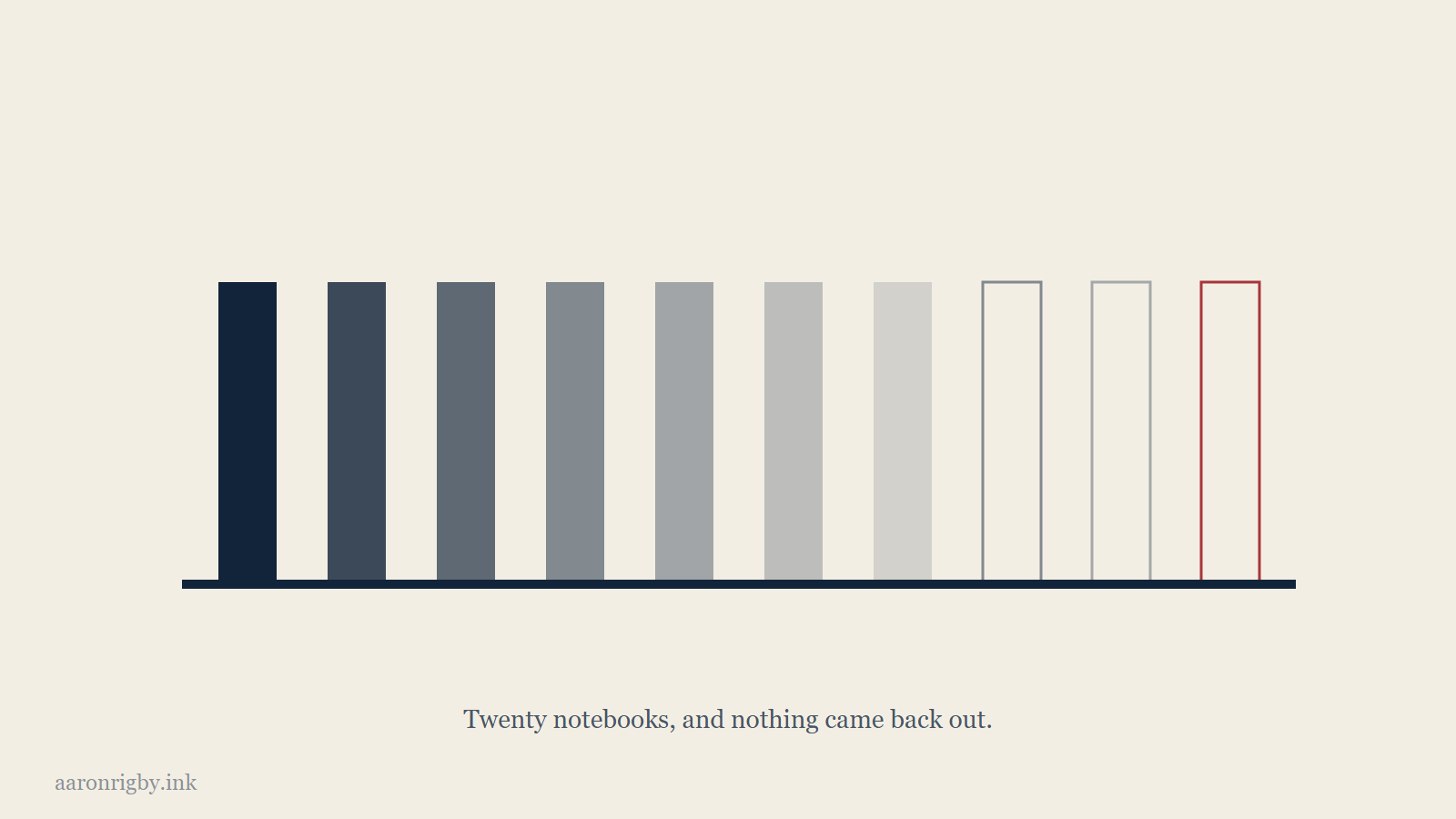
There are twenty leather-bound notebooks on a shelf in my home office. Half used. Stacked like monuments to productivity.
They are Full Focus Planners, a beautiful offline diary system I ran for the best part of a decade. I had the cover custom made in Horween leather and shipped from Canada. I collected fountain pens, proper ones, with nibs you clean and ink you fill. I would turn up to a meeting with the leather planner and the pen and feel like a grown-up.
Flick through them now and you can watch the decay happen. The front of each one is beautiful. Clean handwriting, structured thinking, every section filled in. Halfway through it gets messier. By the back it is desperate scribbles or nothing at all. Eighty dollars a quarter on subscription, new ones arriving like clockwork. They look great on the shelf. Open them up and they are about as full as an empty can of coke.
All input, no output. That is the problem with pen and ink. It only runs one way. You capture with real intention, and then if you ever need any of it back, you had better hope your memory serves.
Then the apps
So the planners gave way to software and I tried the lot. Note tools on the tablet, note tools on the laptop, whatever was being recommended that month.
You know the cycle. You find a new system and it is the greatest thing you have ever seen. You spend a weekend building it out, customising every page, every view, every workflow. It is beautiful. Six weeks later you have not opened it once.
Notion was the big one. I built what I called my second brain, a sprawling thing of linked pages, databases, dashboards and templates. The architecture was impressive. The maintenance ate me alive. Keeping the system fed was taking the time I was supposed to be spending on the actual work, and I had become a full-time administrator of my own productivity system, which is the most ironic way to fail at productivity I can think of.
What actually went wrong
For years I read the graveyard as a discipline problem. Twenty notebooks that trail off into nothing look like twenty pieces of evidence against you.
It was not discipline. Every one of those systems failed the same structural way. They could store information and they could not think about it. They could file and they could not connect. The burden of thinking stayed exactly where it was, on me, and now I had a system to maintain on top of it.
Each tool I bought ran on the same assumption: my job was to capture, its job was to store. I was the engine, it was the warehouse. So the warehouse got bigger every year until I could not find anything in it.
What I needed was not a better warehouse. I needed something that could do work on the information after I put it down. Something that could pull a thread across six markets and see a pattern I was too close to see. Something that could walk into a room with me and answer the question I could not answer in a Bangalore boardroom in front of a client who had my numbers on his laptop.
The test I would use now
Every system on that shelf could file. Not one of them could connect two things I had told it six months apart.
That is the line I judge anything by now. Put two related facts into it, a long way apart, and see whether it ever brings them back together on its own. If you have to remember that they are related, you are the index, and you are the thing that fails.
Ask it for something you cannot already recall. If all it does is hand back what you typed, it is storage. Storage is not what you lost when the job got bigger.
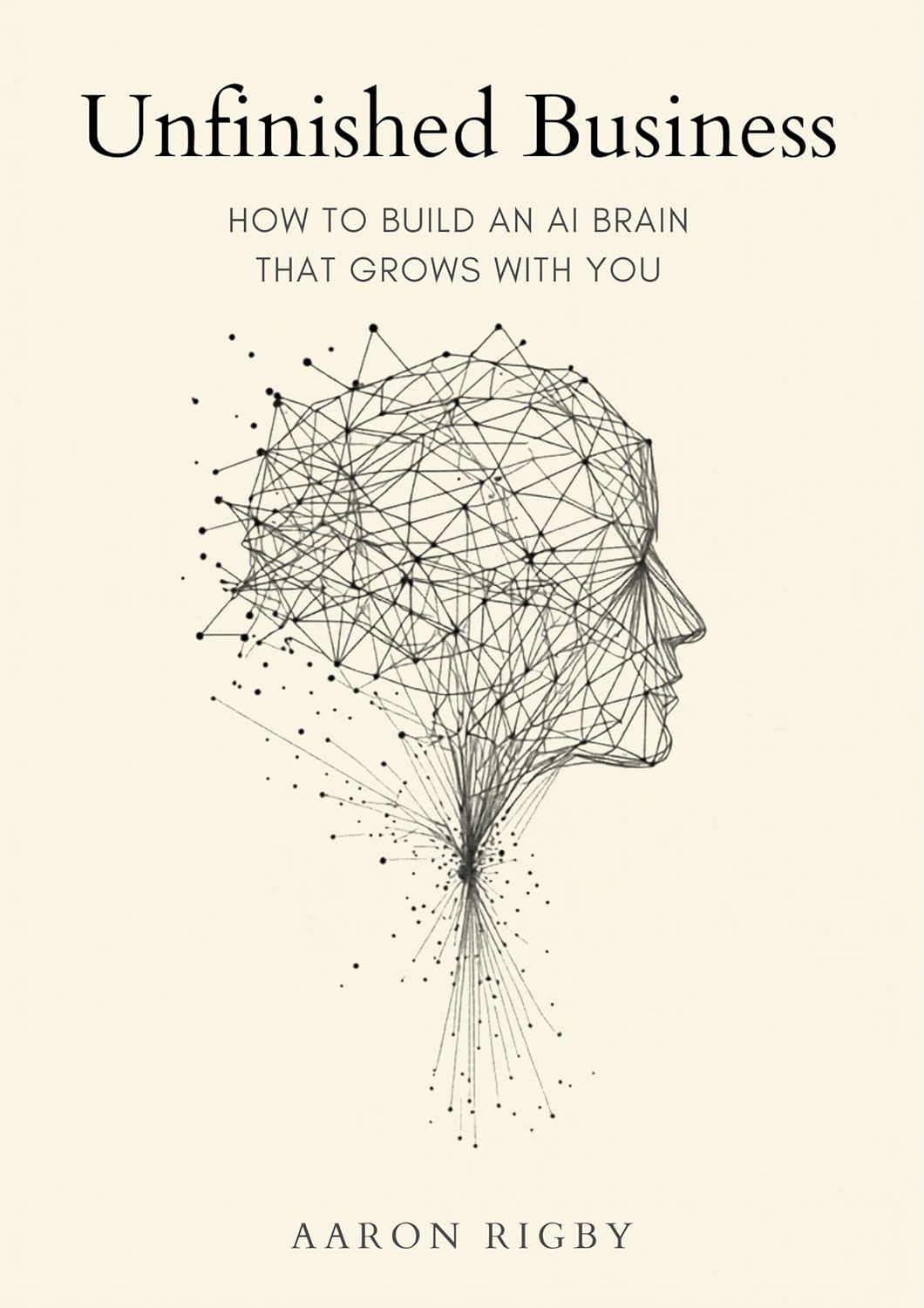
Adapted from chapter one of Unfinished Business. The rest of the book is what I built after the graveyard.
Read more about the book →One email, every second Friday.
What I'm learning about running commercial teams in the AI era.