Everything breaks down into three things
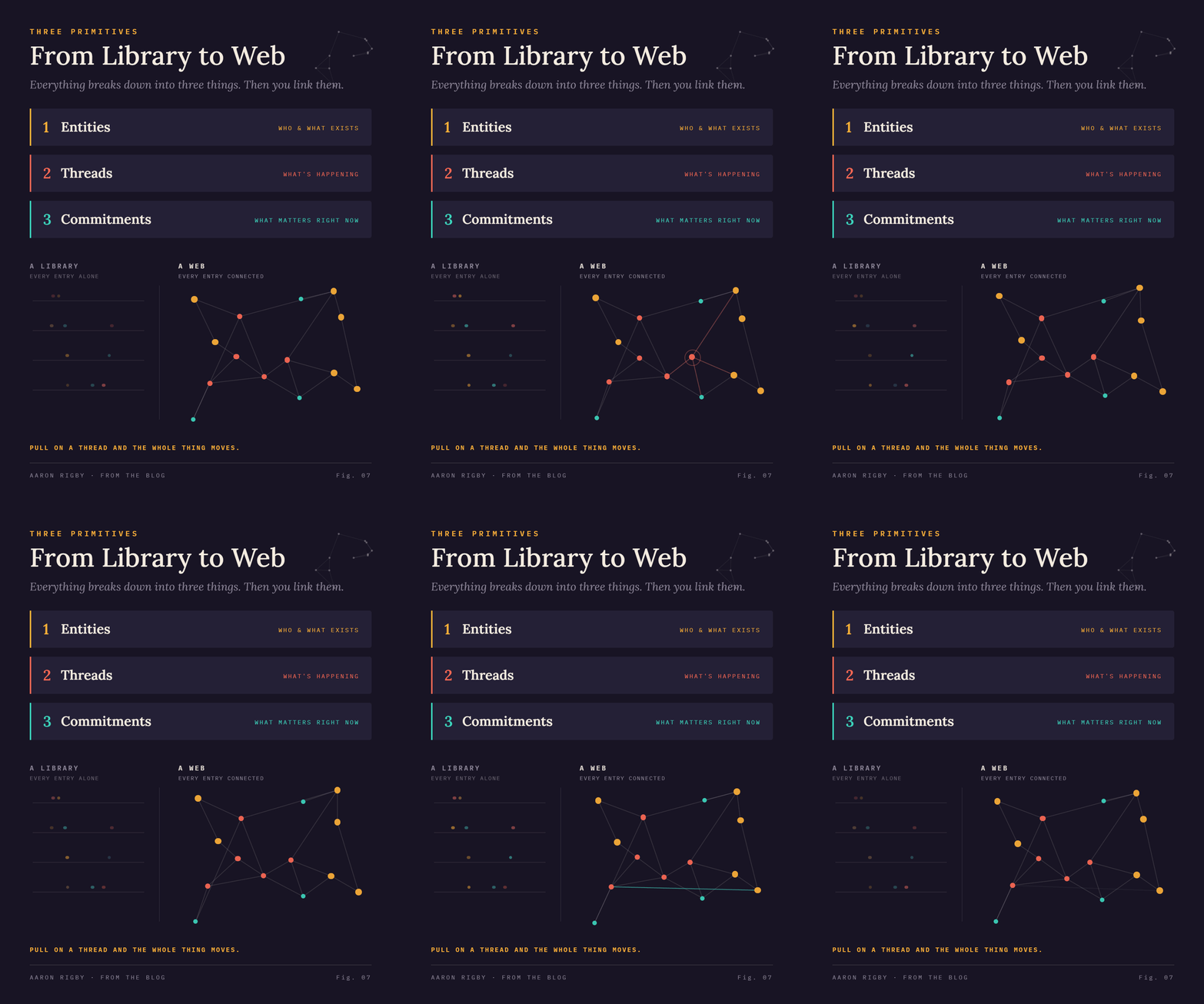
The feedback on the book keeps saying the same thing. It is not the book people thought they were buying.
They go in expecting a manual for using Claude to remember things. A few pages in they work out it is mostly about the structure of knowledge. The AI is just the plumbing that finally made it work.
I have been building knowledge repositories my whole life. Diaries first. Then iPad files. Then Notion dashboards, rebuilt more times than I want to admit. Different tools, same instinct, same failure.
What I found eventually is that it does not matter where you put the information or how you organise it. Everything breaks down into three things.
Entities. Who and what exists.
Every person and every company in your working life. Not a contact card and not a CRM record, because both of those are forms someone has to fill in.
An entity is a living portrait. What is true about them, who they are connected to, how they like to work, and what has happened between you. It gets updated by the fact of you interacting with them rather than by you remembering to maintain it.
Threads. What is happening.
A deal, a hire, a launch, an argument that has been running for four months. Not a row in a pipeline with a stage and a probability, because that flattens the only part that matters.
A thread is a story. It has a beginning, a set of connections to other threads, momentum that is either building or dying, and eventually a decision. When it closes it does not get deleted. It becomes precedent, which is what you reach for the next time something rhymes with it.
Commitments. What matters right now.
Every promise in both directions. What you owe someone and what someone owes you.
Commitments are born inside threads and then need tracking on their own, because the thing that damages a relationship is almost never the deal falling over. It is the small thing you said you would send on Thursday.
The part that changes it
That is the whole taxonomy. Every note you or I have ever written is one of those three.
And once your notes and ideas and projects and scribbles are in primitives, you can link them. You stop having a library and you start having a web.
A filing cabinet is great at storing. But one file has no idea the other file exists. They sit there. They do not build on each other. Ten years of diaries and every entry is alone.
A web is different. You pull on a thread and the whole thing moves.
That is not a metaphor for how it feels. It is the actual behaviour. Type one company name and you get the person you met there, the two threads they sit inside, the promise you made in June, and the fact that a colleague in another market had a version of the same conversation in March. None of which you asked for, and all of which changes what you say next.
The structure is what makes that possible. Without the primitives you have a very large folder and a search box, which is the thing I built four times before I worked out why it kept failing.
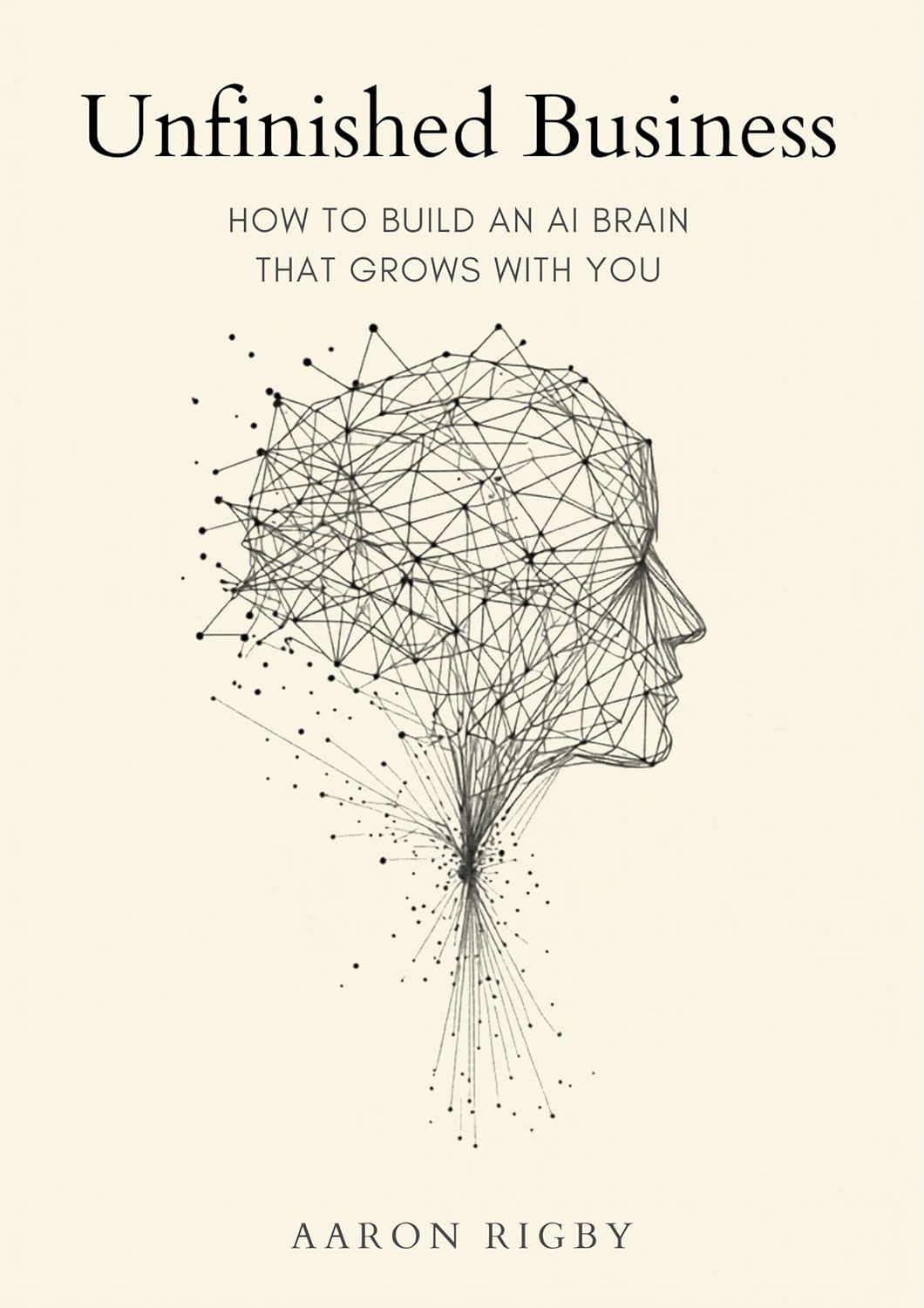
This is chapter two of Unfinished Business, where the primitives and the loop are set out in full.
Read more about the book →One email, every second Friday.
What I'm learning about running commercial teams in the AI era.